In conversation with Pymwymic’s new advisory committee member, Marjolein Brasz.
Systems change, the future of food, and why capital has a critical role to play
Marjolein Brasz has spent her career working on large-scale transitions: how sectors shift, how coalitions form, and how change moves from ambition to practice. Today, as CEO of Foodvalley and newly appointed member of Pymwymic’s Advisory Committee, that experience is focused on one of the most complex transition challenges of all: food, and more specifically, the role that finance can and has to play.
Her career began in energy, first at Shell and later ExxonMobil, where she worked on the European natural gas market. It was a strong commercial foundation, giving her the analytical and strategic tools that would shape her later work. Over time, Marjolein found herself increasingly drawn to work that more closely matched her own values. She moved into sustainable energy and materials, then circular economy, where her focus shifted from individual technologies and applications to the broader question of how systems work and how to change them.
That question eventually led her to Foodvalley, where she became CEO in 2020. What drew her to food was not only the scale of the challenge, but the fact that it connects almost everything else.
“Food influences it all: climate change, biodiversity, social equality, health and people’s everyday lives. It is the lever of change for so many things. At the same time: it is a source of joy, it connects us in the kitchen, at the table, over conversations, I love food!”
That breadth is also what makes the food transition so difficult. Unlike some transitions that can feel more abstract or infrastructure-led, food is deeply personal. It touches what people eat, how farmers work, how communities are built and how land is used.
“The thing with food is that you actually touch people’s autonomy,” Marjolein says. “It’s deeply cultural, emotional and political.”
For Marjolein, this means food systems change cannot rely on individuals constantly making the ‘right’ choice in isolation. People make food decisions every day, often under pressure from cost, convenience, habit or time. The real challenge is to make better choices easier, more accessible and more seamless. This is where her systems-change experience comes through most clearly. Transition work, as Marjolein sees it, is about understanding where momentum already exists, identifying who needs to be involved, and moving supply and demand forward together. If one side moves without the other, change stalls.
“You look at where the energy is, who needs to be involved, and then bring the right people together to move the whole system forward.”
That same perspective shaped her decision to join Pymwymic as member of the Advisory Committee. She was drawn not only to Pymwymic’s mission, but to the way the team combines purpose with professionalism.
“Whoever I speak to at Pymwymic, within the wider community, has similar values: openness, caring for the environment, but also high professionalism.”
For Marjolein, that combination matters. Transforming food systems requires conviction, but also discipline, capital and the ability to scale solutions that work. In her view, changing the system also means changing how money is allocated: towards the people, companies and systemic models that can help build a healthier food system.
As part of the Advisory Committee, Marjolein sees an opportunity to support Pymwymic as it continues to grow its role in the food transition. That means backing strong companies, while also thinking about how capital can contribute to broader systems change over time. Her aspiration is that Pymwymic continues to evolve in a way that is both ambitious and responsible, staying close to its values while increasing its impact.
Despite the scale of the challenge, Marjolein remains optimistic. It is not naïve optimism, she is clear-eyed about the pressure on nature, biodiversity and the speed at which change is needed. But she also sees more people waking up to the urgency of food systems transformation and finding one another, so (private) money is increasingly allocated in that direction.
“I truly believe we are inventive enough,” she says. “In the meantime, we just have to keep doing the good work.”
That spirit is exactly why we are so pleased to welcome Marjolein as part of Pymwymic’s Advisory Committee. Her experience across transition, coalition-building and food systems brings a valuable perspective to Pymwymic as we continue on our mission to redefine food systems from the soil up.
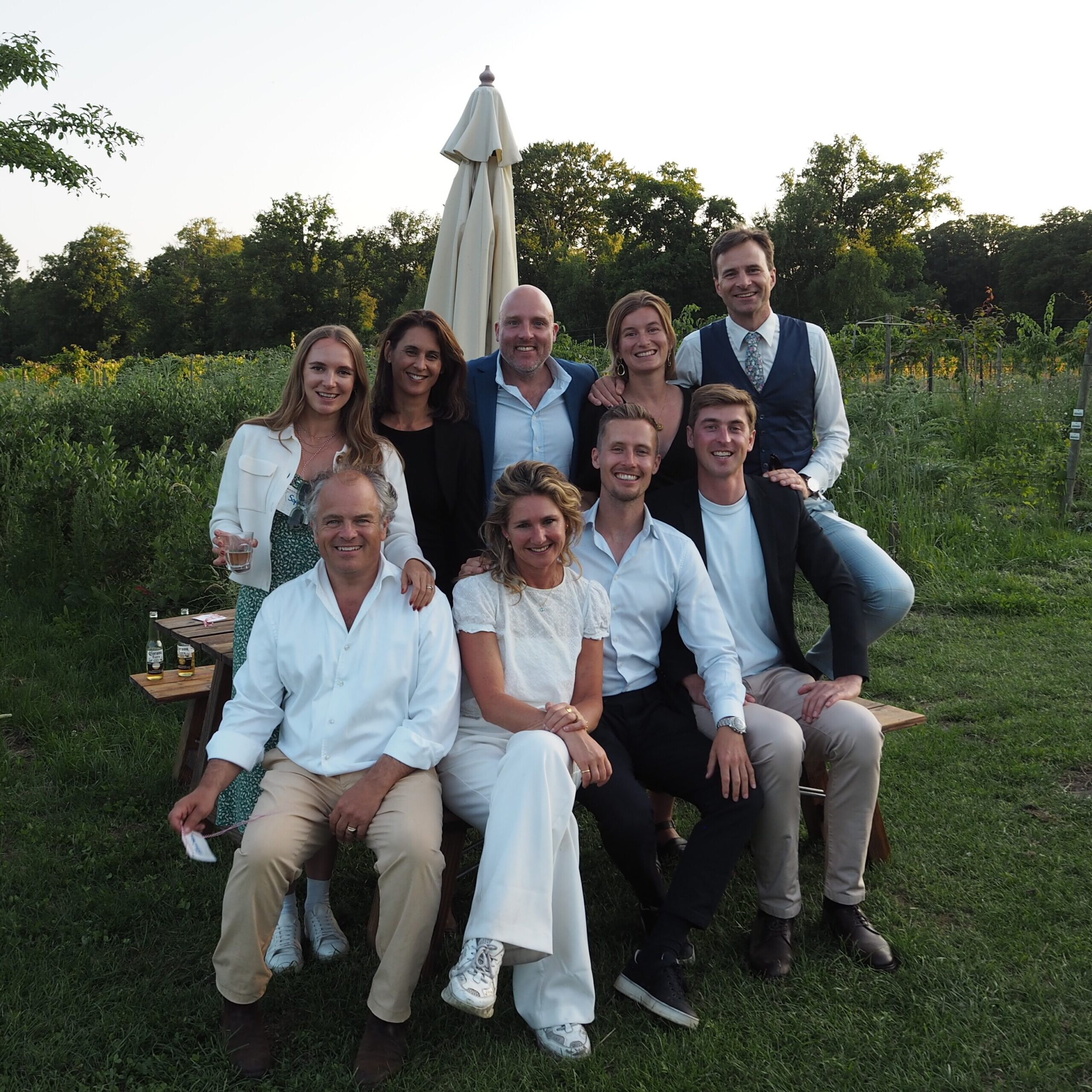
Meet the other members of our Advisory Board

Wim van Droffelaar, Chair
Wim is a prominent Dutch business advisor, entrepreneur, and board member specialising in social entrepreneurship, legal services, and impact investing.

Guus Overdijkink, Member
Guus has been active in Private Equity since 2000; including 10 years at 3i, 8 years at family offices, and also as co-founder of Victus Participations.

Rist Brouwer, Member
After an earlier career as a technology entrepreneur, Rist spent 20 years in private equity — most recently as a Managing Director at Intermediate Capital Group (ICG).




Think we’d make a good fit?
If you’re a game-changing agri/food startup looking to scale your impact, let’s connect.